Table Of Content
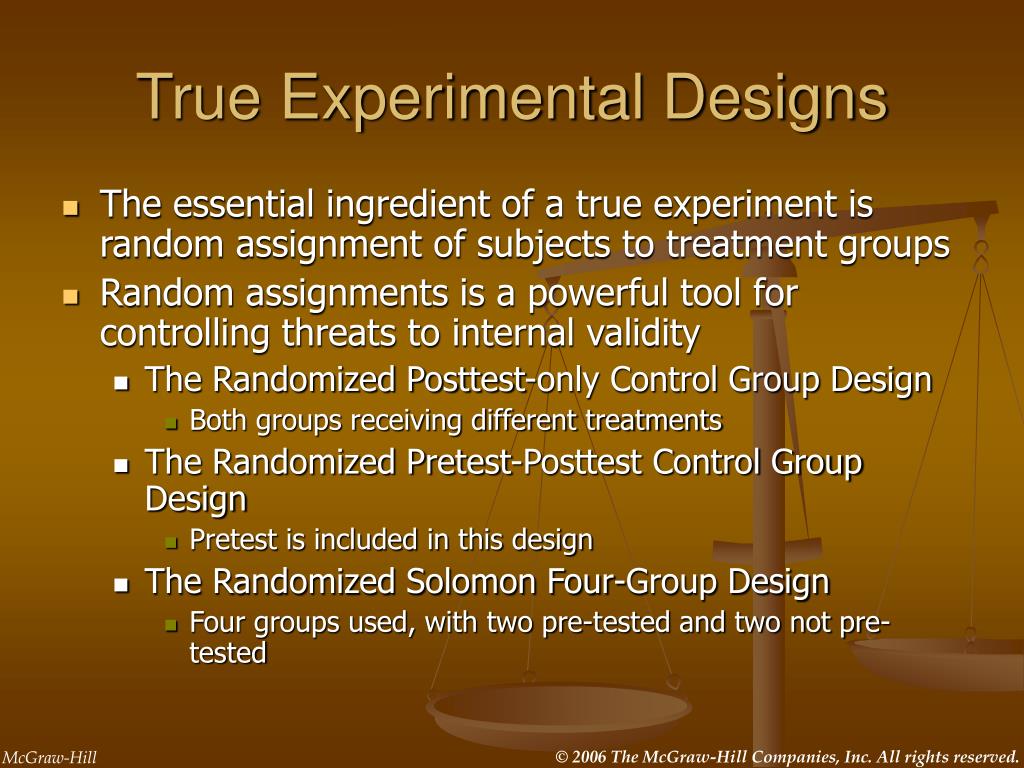
In this design, each participant is exposed to all of the different treatments or conditions, either in a random order or in a predetermined order. Experimental designs are a set of procedures that you plan in order to examine the relationship between variables that interest you. You should also include a control group, which receives no treatment. The control group tells us what would have happened to your test subjects without any experimental intervention. To assess the effect of the organization on recall, a researcher randomly assigned student volunteers to two conditions. One member of each matched pair must be randomly assigned to the experimental group and the other to the control group.
Experimental research design example
There are several actions that could trigger this block including submitting a certain word or phrase, a SQL command or malformed data. Experimental research establishes a cause-effect relationship by testing a theory or hypothesis using experimental groups or control variables. In contrast, descriptive research describes a study or a topic by defining the variables under it and answering the questions related to the same.
Factorial Design Example Revisited

If you cannot manage the ethical norms along with your research study, your research objectives and validity could be questioned. By creating a research design, a researcher is also giving oneself time to organize the research, set up relevant boundaries for the study, and increase the reliability of the results. Through all these efforts, one could also avoid inconclusive results. If any part of the research design is flawed, it will reflect on the quality of the results derived. At the end of three weeks, the researchers give all the participants a questionnaire that measures stress and also take swabs from their saliva to measure stress hormones.
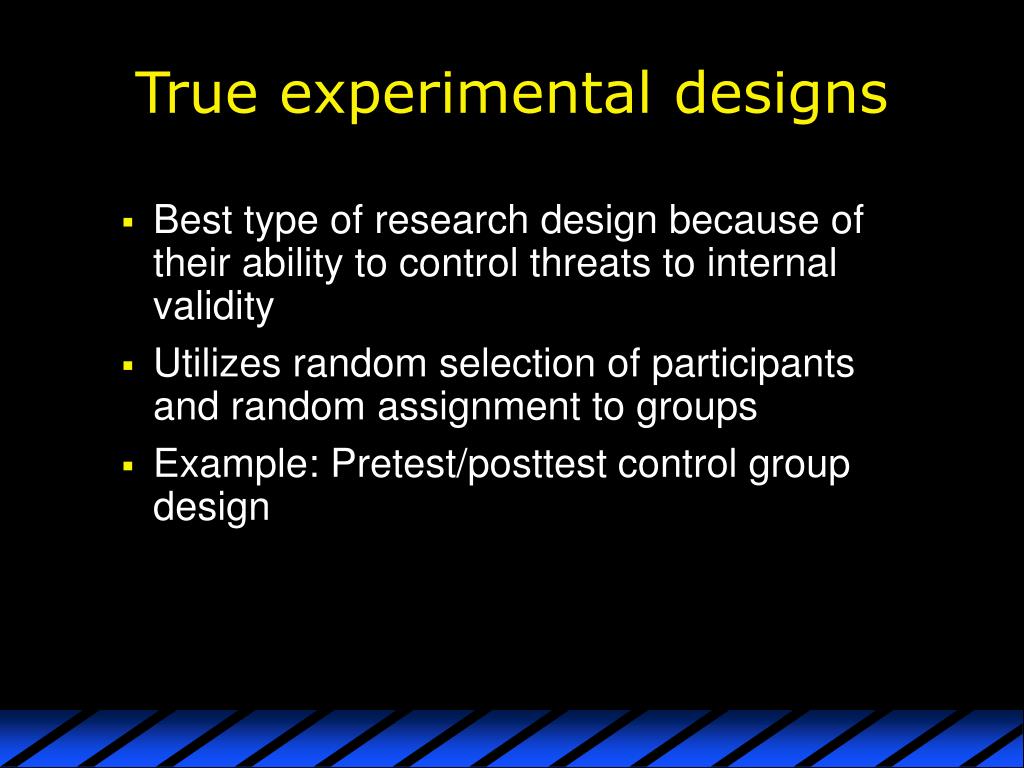
Pretest-Posttest Design
Therefore, it is essential to cater undivided attention and time to create an experimental research design before beginning the practical experiment. Experimental research design is a framework of protocols and procedures created to conduct experimental research with a scientific approach using two sets of variables. Herein, the first set of variables acts as a constant, used to measure the differences of the second set. The best example of experimental research methods is quantitative research. Experimental design involves testing an independent variable against a dependent variable. It is out of this target audience that a sample needs to be selected for accurate research to be carried out.
Dynamic, adaptive sampling during nanopore sequencing using Bayesian experimental design - Nature.com
Dynamic, adaptive sampling during nanopore sequencing using Bayesian experimental design.
Posted: Mon, 02 Jan 2023 08:00:00 GMT [source]
Cluster Randomized Design Cons
Think of this design as the commentator or the journalist who covers the game but doesn't actually play. Quasi-experiments still play with an independent variable, just like their stricter cousins. It's like wanting to divide a bag of jelly beans equally between your friends, but you can't quite do it perfectly. Well, in the world of research, experimental design is like the roadmap that helps you find those clues.
Then you need to think about possible extraneous and confounding variables and consider how you might control them in your experiment. A confounding variable could be an extraneous variable that has not been controlled. Condition one attempted to recall a list of words that were organized into meaningful categories; condition two attempted to recall the same words, randomly grouped on the page.
In this design, participants are randomly assigned to one of two or more groups, and each group is exposed to a different treatment or condition. Randomly allocating participants to independent variable conditions means that all participants should have an equal chance of taking part in each condition. A matched pairs design is an experimental design where pairs of participants are matched in terms of key variables, such as age or socioeconomic status. One member of each pair is then placed into the experimental group and the other member into the control group.
What are the Data Collection Methods in Experimental Research?
Before initiating the true experimental research, each participant’s current performance at the workplace is evaluated and documented. As the study goes on, a progress report is generated for each of the 300 participants to monitor how their physical activity has impacted their workplace functioning. True-experimental research is often considered the most accurate research. A researcher has complete control over the process which helps reduce any error in the result.
Picture it as the grand storyteller, the kind who doesn't just tell you about a single event but spins an epic tale that stretches over years or even decades. This design isn't about quick snapshots; it's about capturing the whole movie of someone's life or a long-running process. So next time you read about a groundbreaking discovery in medicine or technology, chances are a True Experimental Design was the VIP behind the scenes, making sure everything was on point.
When collecting data through surveys, the kind of data collected depends on the respondent, and researchers have limited control over it. A survey is a tool used to gather relevant data about the characteristics of a population and is one of the most common data collection tools. A survey consists of a group of questions prepared by the researcher, to be answered by the research subject. When researching the effect of social interaction on human behavior, the subjects who are placed in 2 different environments are observed throughout the research. No matter the kind of absurd behavior that is exhibited by the subject during this period, its condition will not be changed.
We want to study the factors in combination; otherwise, any interactions between them will go undetected and the statistical efficiency to estimate factor effects is reduced. Another type of quasi-experimental design might occur when the researcher doesn't have control over the treatment but studies pre-existing groups after they receive different treatments. The use of a control group is an important experimental design method that involves having a group of participants that do not receive the treatment or intervention being studied. The control group is used as a baseline to compare the effects of the treatment group. You manipulate one or more independent variables and measure their effect on one or more dependent variables. This design's main selling point is its ability to explore interactions between variables.